Which wineries worth visiting for their impressive architecture? The estates on this list aren't production sites with a tasting room bolted on as an afterthought. They're considered statements in concrete, glass, timber and stone, where the architecture shapes how you move through a space, how you feel in it, and ultimately, how you taste what's in your glass. The building is the first impression. The landscape is the second. What arrives in your glass is the third, and by that point, you've already sold.
Here's where to go, and what to order when you get there.
Which Wineries Are Worth Visiting for Their Architecture?
Ca' del Bosco, Franciacorta, Italy

In Lombardy's Franciacorta region, Ca' del Bosco feels less like a traditional cantina and more like a contemporary art park that happens to produce exceptional sparkling wine. Sculptures in the vineyards, sleek concrete and glass, and a famous “immersion room” lit by thousands of empty bottles. It's theatrical in all the right ways.
Franciacorta is Italy's serious answer to Champagne, made by traditional method. The house signature is the Cuvée Prestige — creamy, citrusy, brioche-edged and made for an aperitivo. Step up to Annamaria Clementi, their top cuvée, predominantly Chardonnay with Pinot Nero and a touch of Pinot Bianco, long lees ageing, real depth. Start with one, finish with the other alongside food. This is sparkling built for a tasting menu, not a toast.
Read our full feature about Ca' del Bosco here!
Website: www.cadelbosco.com
Antinori nel Chianti Classico, Italy

Probably the most discussed “landscape building” in the wine world. The winery is cut directly into the hillside, vineyards run across the roof, and the structure reveals itself as a long terracotta incision in Tuscan clay. It shouldn't work as well as it does. It absolutely does.
You're in Chianti Classico territory, which means Sangiovese is the point. Work through a side-by-side of a classic Chianti Classico — cherry, violet, spice, that signature acidity — and one of the more ambitious estate reds that bring Cabernet into the picture. It's the clearest way to understand the jump from regional to serious.
Website: www.antinori.it
Marqués de Riscal, Rioja, Spain

Frank Gehry in Rioja. The “City of Wine” is all swooping titanium ribbons coloured to echo the label: gold, pink, silver drifting over 19th-century stone cellars below. Still one of the world's top wine-tourism destinations, and still worth every bit of the hype.
Two directions to explore: the Rioja reds, from Crianza up to Gran Reserva, all built on Tempranillo with Graciano and Mazuelo adding complexity as you climb; the Rueda whites, crisp Verdejo with citrus, fennel and a gentle bitterness that handles seafood beautifully. Order one of each. It's a compact portrait of modern Spain in two glasses.
Website: www.marquesderiscal.com
Bodegas Ysios, Rioja Alavesa, Spain

Santiago Calatrava at full wave-form. A long barrel-shaped volume with a jagged aluminium-and-cedar roofline that mirrors the Sierra de Cantabria directly behind it. From a distance it reads like a sculpted soundwave. Up close, it's even better.
Inside it's 100% Tempranillo from old bush vines in prime Alavesa villages — concentrated dark fruit, spice and fine tannins. The architecture earns its attention, but so does the Ysios Selección. Sit down with a glass and give it the time it deserves.
Website: bodegasysios.com
Petra Winery, Maremma, Italy

Mario Botta's giant stone drum driven into a Maremma hillside, with a central staircase that feels almost ceremonial. Much of the winery sits underground, where gravity and cool temperatures handle most of the work. It's restrained and impressive in equal measure.
The wines are Bordeaux varieties meeting Tuscany: Cabernet Sauvignon, Merlot, and Sangiovese in various configurations, structured and dark-fruited with serious ageing potential. Ask about a vertical of the flagship red if you can arrange it. It shows how both the vines and the project have developed over time, and the conversation is worth having.
Website: www.petrawine.it
Herdade do Freixo, Alentejo, Portugal

From the outside, the landscape looks almost untouched. Then you realise the winery spirals underground, linked by a corkscrew ramp that descends up to 40 metres, taking you past tanks and barrels as you go down. It's quietly one of the most original wine experiences in Europe.
The wines are classic Alentejo in character: full-bodied reds built on Cabernet Sauvignon, Alicante Bouschet and Touriga Nacional, polished and structured with real freshness. The whites, from Chardonnay, Sauvignon Blanc, Alvarinho and local varieties, are clean and food-driven. Pair a structured red with Alentejo pork or lamb, then switch to white for the cheese course. The cellar tour is as memorable as the tasting.
Website: www.herdadedofreixo.com
Bodegas Beronia, La Rioja, Spain

Beronia's relatively new winery hides itself in the slope — semi-buried, green-roofed, with a strong sustainability brief that earned it LEED certification. Inside, it's cool concrete, precise lines and serious kit. Nothing showy, everything considered.
The wines follow the same logic. Classic Rioja reds — Crianza, Reserva, Gran Reserva — built on Tempranillo with Graciano and Mazuelo, well-judged oak, very much the Rioja textbook done properly. The Rueda Verdejo from their white project adds a zesty, slightly tropical counterpoint. Try both. They represent the house well.
Website: www.beronia.com
Tsinandali Estate, Kakheti, Georgia

Where Georgian wine first met European technique in the 19th century. A noble estate with landscaped gardens, a historic palace and cellars that bridge qvevri tradition and classical winemaking. Georgia has become one of the more interesting conversations in wine, and Tsinandali is where you begin to understand why.
Start with a classic Tsinandali white — Rkatsiteli and Mtsvane, dry, orchard-fruited, bright — then move to a qvevri Saperavi, which brings grip, earth, and black fruit in a way that feels unlike anything from elsewhere. Two glasses, and you'll understand why the world is paying attention.
Website: tsinandaliestate.ge
Castel Sallegg, South Tyrol, Italy

A proper castle in Caldaro, with vines running down towards the lake and barrels resting in cellars that have been doing this for a thousand years. The architecture is historic rather than forward-facing, but the estate feels composed and confident as a whole. Alto Adige produces some of Italy's most precise wines, and Castel Sallegg is a good place to be reminded of that.
Ask for a flight that covers one white, one red, one sweet. A Pinot Bianco or Chardonnay for the mineral freshness, a Pinot Nero or Cabernet for the structure, and a Moscato Rosa to finish. Alto Adige in three acts.
Website: www.castelsallegg.it
Castello Vicchiomaggio, Chianti Classico, Italy

Stone walls, cypress lines, views across the valley. This is the romantic image of Chianti that also happens to produce wine worth drinking. A working estate in a textbook Tuscan castle, and it delivers on both counts.
The Chianti Classico here is Sangiovese-led with Colorino and Canaiolo in the blend — red cherry, floral notes, savoury herbs, that characteristic Sangiovese backbone of acidity. Try the entry-level Chianti Classico, then move up to one of the estate's higher-tier selections. The castle setting handles the rest of the work for you.
Website: www.vicchiomaggio.it
Vinícola de Nulles (Adernats) & Bodegas Olarra, Spain
Two for the price of one because both carry the same nickname and both have earned it: The Cathedral

Vinícola de Nulles, built in 1917 by Cèsar Martinell in Tarragona, is Catalan modernism at full volume — brick arches, extraordinary natural light, a structure that really does feel like a cathedral dropped into the countryside. Tastings include whites, reds and cavas under the Adernats label. The sparkling, built around Macabeu and Xarel·lo, is where to start.
Website: adernats-shop.com
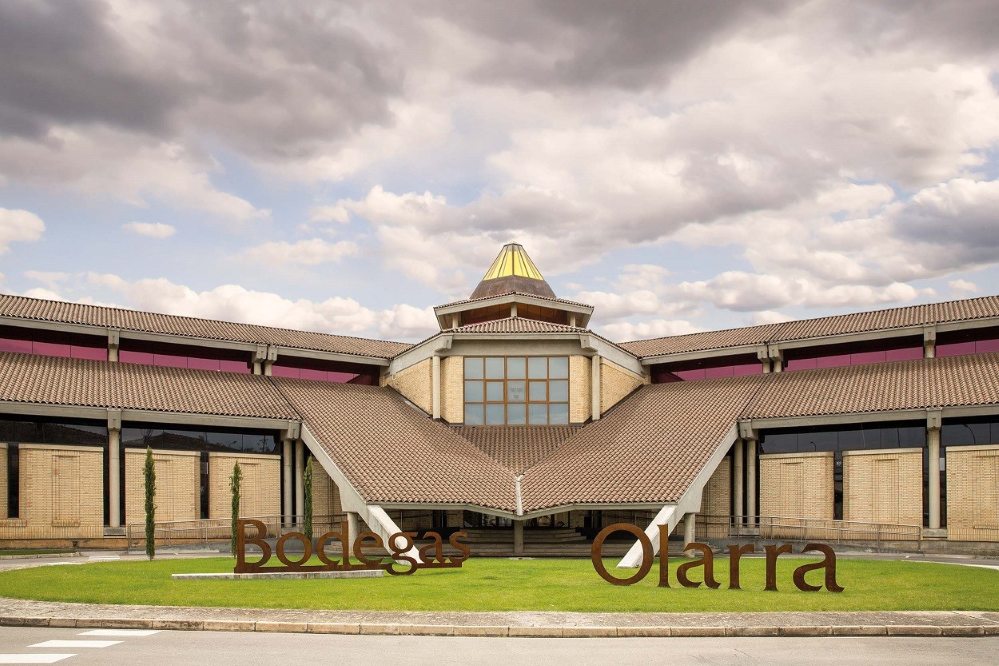
In Rioja, this winery takes its cathedral title from a remarkable star-shaped barrel cellar, a 1970s concrete and brick construction by Juan Antonio Ridruejo. Classic DOCa Rioja across the board, and the Cerro Añón Gran Reserva is the one to order: dark fruit, spice, tobacco, a long finish. The architecture feels like it was built for exactly that glass.
Website: www.grupobodegasolarra.com
Zuccardi Valle de Uco, Mendoza, Argentina

One of the benchmark architectural wineries operating anywhere right now. The building is constructed from local stone, sitting low in the high-altitude desert beneath the Andes, surrounded by vineyards that push the limits of what Malbec can do. Inside: concrete eggs, raw materials, a strong sense that this place could only exist here.
The wines reflect that. Malbec and Cabernet Franc from high-altitude sites, fermented in concrete and aged in large foudres to keep the focus on texture and terroir rather than new oak. The single-vineyard bottles are the ones to pursue if you're paying attention. Book a guided pairing lunch if you can — the combination of setting and glass is about as good a definition of a destination winery as 2025 has to offer.
Website: zuccardiwines.com
Schmidt Winery, Lake Constance, Germany

The Schmidt Winery’s main production building is a living testament to the values of its founding family. Inspired by the age-old family farmhouse, it is composed almost entirely of wood and sits atop a hill surrounded by the very rows of organised grapevines that represent the Schmidt livelihood.
The glacier moraine, or the mass of rocks and sediments that were deposited here during the last ice age, gives the soil a unique composition of finely ground limestone, sandstone, and granite. It is this terroir that makes the Schmidt wine so expressive and lends it a mineral taste that is rare in Pinot varieties, which the vineyard focuses on, specifically Weissburgunder (Pinot Blanc), Grauburgunder (Pinot Gris) and Spätburgunder (Pinot Noir).
Read our full feature here.
Website: www.schmidt-am-bodensee.de
Bodegas López de Heredia Viña Tondonia, La Rioja, Spain

The winery is a living testament to the 19th century, where time seems to have stood still within its stone walls and underground cellars that reach depths of ten meters. One of the most fascinating aspects of its architecture is the contrast between the ancient and the modern: the main entrance features a tasting pavilion designed by the prestigious architect Zaha Hadid, which shelters an antique wooden stand from the 1910 Brussels World's Fair. This blend of avant-garde and tradition captures perfectly the essence of a family that has managed to keep its production methods intact while the wine world around them became fully industrialized.
The estate’s flagship wine, Viña Tondonia Reserva & Gran Reserva, are sourced from their most iconic vineyard. These are world-renowned for their incredible longevity, complexity, and silky texture, often aged for many years beyond legal requirements before release.
What connects all of these estates isn't a single architectural language or a shared wine style. It's a shared conviction: that the place where wine is made and experienced should tell the same story as what ends up in the bottle. At the best ones, the building, the landscape, and the glass feel like three chapters of the same thing.
You go for the architecture. You stay for the wine. Ideally, you leave with both still clear in your mind.
Read more:
- Winery Rings: The Young and Experimental Winemakers
- Pairing Perfection: André Macionga’s Secrets to Wine Harmony
Last Updated on October 6, 2026 by Editorial Team